onsdag den 2. april 2014

P4 / Re-inhabitation / Interview with trumpeter, Anders Larsen


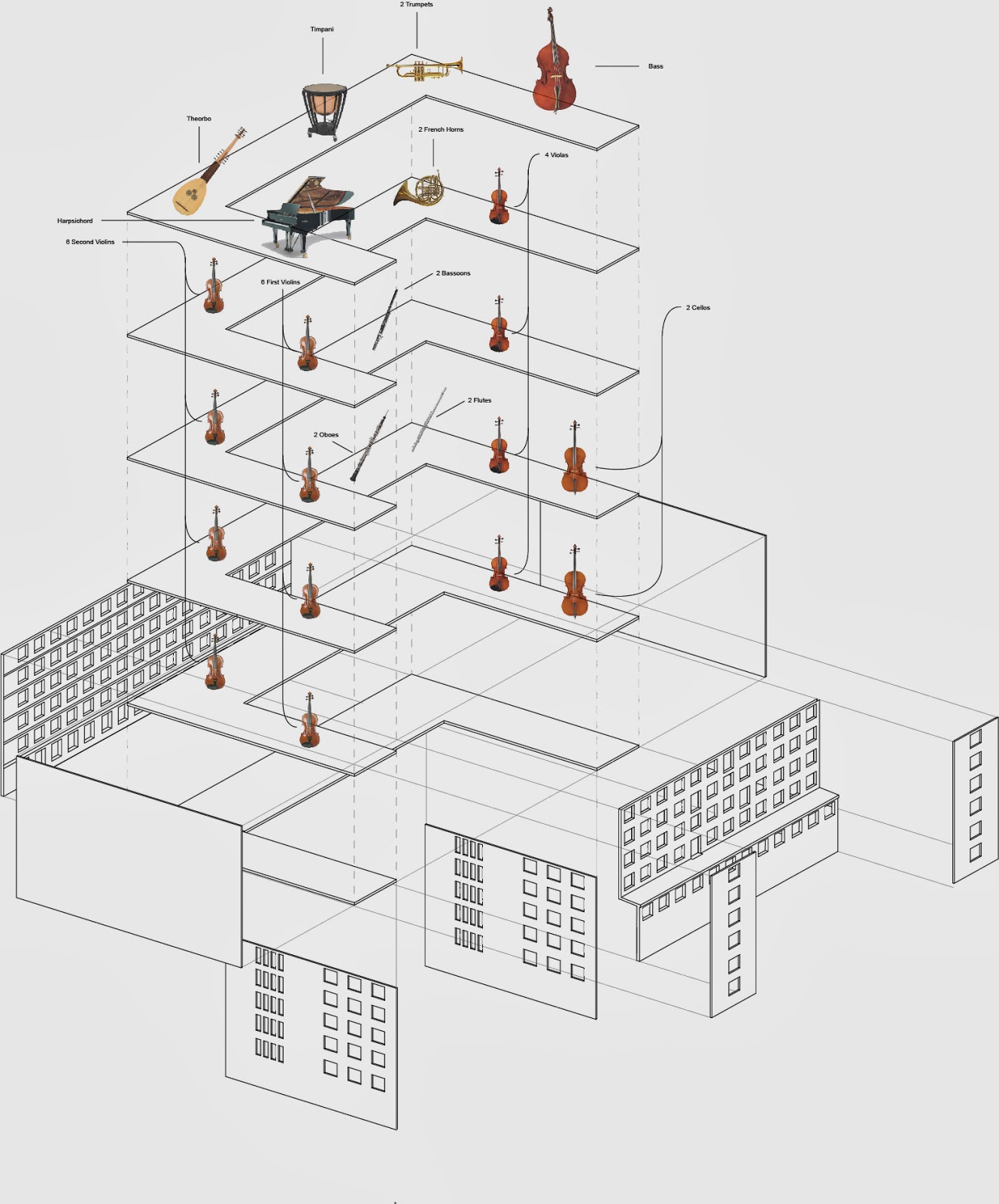
Rehearsal Space - adaptable surfaces, reflective or absorbent


Hallways


Symphonic Hall - Larger surfaces breaks up deep tones


Symphonic Hall - Smaller surfaces breaks up high tones 


Symphonic Hall - Red carpet can be pulled out for damping the sound.


Symphonic Hall - The farther the sound has to travel, the worse it gets.


Sinfonietta Rehearsal


mandag den 31. marts 2014

P4 / Re-inhabitation / Interview with trumpeter, Anders Larsen

Rehearsal
"He would prefer a light room with 3-4 meters to the ceiling, glass can be used as a reflective surface."

"He rehearse 4-5 hours daily alone."


Performance
"Larger surfaces are used to break up sound from deeper tones and smaller surfaces are used to break up lighter tones."

"Longer reverberation time blurs the sound, but makes the instrument still sound when not playing."

"Music next to the ear makes the experience more intimate."

"The longer the sound has to travel the worse the sound gets."

"Terraces breaks up the sound."

"When playing in an orchestra one is very much aware of the other musicians."

"In the ceiling of the symphonic hall there are huge adjustable panels."    


Individual instruments
"The French horn plays backward and at least 2 meters to a wall is required."

"Trumpet and Trombone are directional."

"The floor underneath the Bass is able to vibrate so the the floor does not absorb the deep tones."

"Clarinet, Piano, Violin, and Viola are warm and intimate instruments."

"Cello are lifted because it is played near the ground."

"Bassoon is clearly deeper than the Flute."

"Percussion needs a lot of space." 


P4 / Re-inhabitation / Program sheet


søndag den 9. marts 2014

onsdag den 5. marts 2014

P3 / Reprogramming / Design Parameters


P3 / Reprogramming / Diagram


3
  a Reflections from the rear wall with a long delay increase the risk of echoes. Right-angles are particularly treacherous because the sound is reflected back parallel to its original direction.

Disturbing reflections can be avoided by:
  b including absorbent surfaces,
  c positioning the rear part of the ceiling at an angle,
  d including structured wall surfaces.

- MOMMERTZ, Eckard (2009) Music, Acoustics and Sound Insulation, Birkhäuser, p. 17

P3 / Reprogramming / Diagram


1 How the plan shape shape of a room affects the early reflections from the side walls
  a Narrow, rectangular rooms send reflections from the side walls to the seats.
  b If the room widens towards the rear, the sound is reflected to the rear of the room.
  c Concave plan shapes focus the soundwaves, which usually leads to disturbing concentrations of sound

2
  a The soundwave illustrates flutter echoes between parallel wall surfaces.
  b This can be avoided by designing the stage to taper towards the rear.
  c If the walls taper inwards a little, the soundwave is reflected back and unpleasant flutter echoes can be the result.

- MOMMERTZ, Eckard (2009) Music, Acoustics and Sound Insulation, Birkhäuser, p. 16  

P3 / Reprogramming / Diagram


- MOMMERTZ, Eckard (2009) Music, Acoustics and Sound Insulation, Birkhäuser, p. 11


P3 / Reprogramming / Diagram


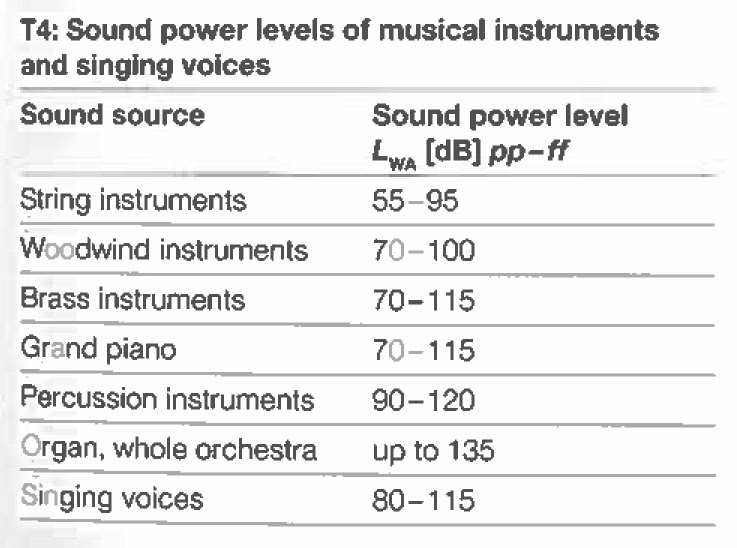
Frequency ranges of musical instruments and singing voice

- MOMMERTZ, Eckard (2009) Music, Acoustics and Sound Insulation, Birkhäuser, p. 8
P3 / Reprogramming / Diagram


Two sinusodial pitches (pure tones) with frequencies that differ by a factor of 100. High pitches correspond to short wavelenghts, low pitches to long wavelenghts.

- MOMMERTZ, Eckard (2009) Music, Acoustics and Sound Insulation, Birkhäuser, p. 8

tirsdag den 4. marts 2014